
Tuesday, 4 February 2014

Monday, 3 February 2014
Sunday, 2 February 2014
Infogram
An Interesting Presentation Tool
-
target audience research
- visual representations of your idea for your thriller/music video
- one of your evaluation questions
You can make your own inforgraphs using a range of different websites. Some are more advanced than others:
Quite an advanced website is https://magic.piktochart.com/ . It has lots of free templates and you can create some really interesting things. Here is an example:

If you're in need of something a bit more basic and less time consuming then infogr.am is the one for you
Here is an example:
A third option is http://www.easel.ly/
Here is an example:

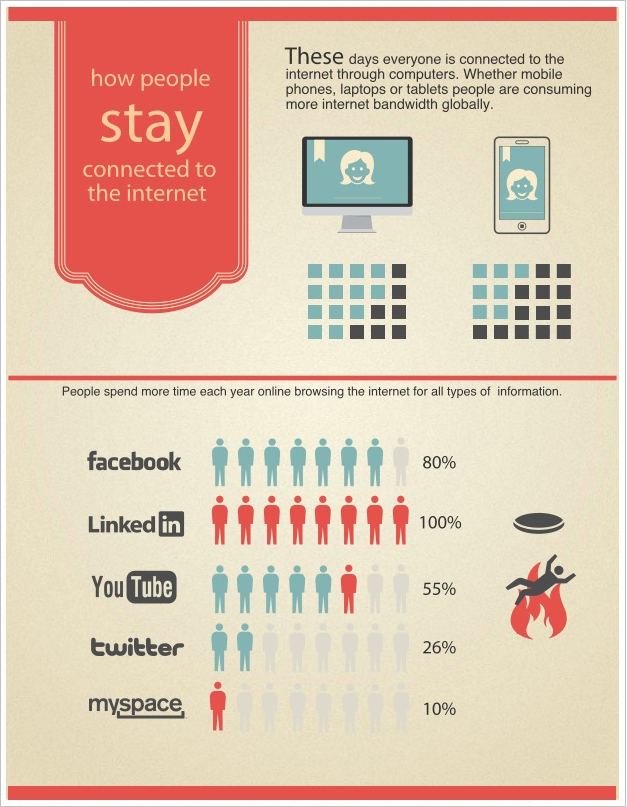
easel.ly
Wednesday, 29 January 2014
Album Art Exercise
A2 Music Video Coursework
Album Art Exercise for Digipak & Advert
Follow the link below and complete the exercise to create your own album art quickly and simply. When finished post onto your blog and evaluate the effectiveness of the finished piece of work.
http://petesmediablog.blogspot.co.uk/2013/11/death-of-album-part-2.html
Album Art Exercise for Digipak & Advert
Follow the link below and complete the exercise to create your own album art quickly and simply. When finished post onto your blog and evaluate the effectiveness of the finished piece of work.
http://petesmediablog.blogspot.co.uk/2013/11/death-of-album-part-2.html
Mr Williamson's Postmodern Scheme Of Work
1.
Film Run Lola Run
–notes from Power Point on Blog -
characteristics:
self reflexive, fractured narratives, no
meta narratives, inter-textual reference,
like a game.
2.
Film Pulp Fiction
– –notes from Power Point on Blog - repeat characteristics.
3.
Television
- Introduce
“The Simpsons” Main Power Point 120-138.
Inter-textual reference
Link with “Pulp Fiction”Episode’ “22 Short Films about Springfield” (Series 7
Episode 21), the whole episode is a loose parody of Tarantino’s
“Pulp Fiction”. – link with Martha Stewart Show etc.
Main Power
Point – 140-163.
Essay Why
is this episode Post Modern? Main Power Point 164-177
4.
Television “The War You
Don’t See” + BBC News War in Iraq introduce Baudrillard - –notes from Power
Point on Blog on Baudrillard - Main
Power Point Baudrillard 27-49.
5.
Television Episode “Homer Badman”
(Season 6 Episode9) of
“The Simpsons” is postmodern. In this episode, Homer himself becomes the
subject of the media spotlight when he is wrongfully accused of sexually
harassing his babysitter - Main Power Point Baudrillard 27-49 + slide 50.
+ 273-306.
6.
Television “Outfoxed” –
Main Power Point Baudrillard 27-49 (particularly 42-46).
7. Television
Power of Meta Narratives – Main Power
Point Lyotard 11-17 + 188-193. “Lisa the Iconoclast” (Series7 Episode16)
highlights the distress caused to the local population when Jebediah
Springfield is exposed as a fraud.
8. Television
Power of Meta Narratives Main Power Point Lyotard 11-17 + 194-206. “Lisa the
Sceptic” (Series 9 Episode8), Lisa challenges Christianity by claiming a fossil
is not an angel.
9. Television
Simpsons “She of Little Faith” Season 13 Episode 6 Disc 2. Main Power Point 210
– 218.
10. Film “Inglorious Basterds” where history is
re-written and Hitler, Goebbels, Borman and Goering are killed (all the rotten
eggs in one basket). –notes from
Power Point on Blog. Main Power Point Jameson 20-26 and 326 -325.
11. Film In
“Scott Pilgrim versus the World” the defeated ex lovers perish in the same way
enemies are eliminated in computer games. –notes from Power Point on Blog – Main Power Point 53-59
+ 60-119
12. Television Simpsons Self
Reflexivity / Pastiche – Main Power Point 236 -241.
13. Television
Charlie Brooker - “Big Brother”, “The Only way is Essex” and “Geordie Shore” –
Foucault – Panopticon
14.
Simpsons Revision Main Power Point 317-323.
a. Essays –
all four must be completed.
15. Explain why
the idea of postmodern media might be considered controversial.
16.
Explain how certain types of media can be
considered postmodern.
17.
Postmodern media blur the boundary between
reality and representation. Discuss this idea with ref to text you have
studied.
18.
Discuss why some people are not convinced by
the idea of postmodern media.
Tuesday, 28 January 2014
Monday, 27 January 2014
Is Hollywood's Blockbuster Model Broken (From BBC)
|
It may have lacked a generation-defining event
movie like 1977's Star Wars, or even a technological ground breaker like 2009's
Avatar, but 2013 was still the year of the Hollywood blockbuster.
This year, 26 films costing more than $100m (£61m)
each were released by the major Hollywood studios - more than ever before. They
are likely to have raked in tens of billions of dollars in worldwide box office
revenues as a result - close to the record $35bn (£21.5bn) delivered in 2012.
Some of the films did badly. The Lone Ranger,
starring Johnny Depp, barely made back the $250m it cost to make. But the hits
outweighed the flops: Iron Man 3 took $1.2bn in box office receipts around the
world, topping the charts and making it the fifth highest-grossing film of all
time.
But despite the runaway successes, there are
concerns within Tinseltown that blockbuster budgets are getting dangerously
high.
Bankrupted
"There's eventually going to be an implosion,
or a big meltdown," said Hollywood elder statesman Steven Spielberg in a
speech earlier this year. "Three or four or maybe even a half dozen
mega-budget movies are going to go crashing into the ground, and that's going
to change the paradigm."
It has happened before. In 1980, Heaven's Gate effectively bankrupted
United Artists. The budget for the sprawling Western got out of control, the
film bombed, and the studio was forced into a takeover by MGM.
Hollywood watchers say it's a statistical certainty
that another bomb to rival Heaven's Gate, or even 1995's Waterworld, is around
the corner. But the difference, they say, is that modern Hollywood studios are
equipped to cope.
After a wave of acquisitions in the 80s and 90s,
the six "majors" that dominate global box office are now parts of
massive media conglomerates. They have found ways to both boost profitability
of their films and mitigate the risks associated with making such huge investments.
HIGHEST-GROSSING FILMS OF 2013 WORLDWIDE
1.
Iron Man 3 (Walt Disney) - $1.2bn
2.
Despicable Me 2 (Universal) - $919m
3.
Fast & Furious 6 (Universal) -
$789m
4.
Monsters University (Walt Disney) -
$744m
5.
The Hunger Games: Catching Fire
(Lionsgate) - $730m
6.
Man of Steel (Warner Brothers) -
$663m
7.
Gravity (Warner Brothers) - $642m
8.
Thor: The Dark World (Walt Disney) -
$620m
9.
The Croods (20th Century Fox) - $587m
10.
World War Z (Paramount) - $540m
Source: Box Office Mojo
The first thing the studios have done is spread the
risk by getting dozens of smaller production companies to invest alongside
them, reducing their exposure to a potential flop.
Revenue streams
The second thing is that they have made the success
of their films almost a sure thing.
Recent research by British film academics John
Sedgwick and Mike Pokorny has found that not only have blockbuster films become
more profitable over the past 20 years, they have become more reliably
profitable: in the late 80s just 50% of major studio films turned a profit. In
2009 it was 90%. Flops have become rare.
"[Studios] are ruthlessly good at getting
returns from their investments," Prof Sedgwick says. "Hollywood has
got better and better at it. The more you spend, the more you get back. It
seems to me to be an extraordinarily successful model."
How have the studios achieved this?
The first step has been to generate new revenue
streams. In the early days of Hollywood, 100% of revenues came from ticket
sales. Now it's just 20%. The rest of the money comes from television
licensing, DVD sales, merchandising and other commercial deals.
"Blockbuster films are not really films,"
says Charles Acland, a professor of communication studies at Concordia
University in Montreal, and author of the book Screen Traffic. "They are
in fact very elaborate 'tent-pole' business models that connect all sorts of
different commodities in all sorts of different industries."
The second step has been to look beyond the domestic US market, where
cinema audiences aren't really growing, and look overseas to developing markets
such as China.
Iron Man 3 earned two-thirds of its revenues
outside of the US. The Chinese version of the film even had four extra minutes
of footage, featuring Chinese actors and half a dozen Chinese product
placements.
Finally, the studios have become incredibly
risk-averse in terms of the types of films they produce. Instead of taking a
chance on new directors and original ideas, they produce tried-and-tested
franchises, remakes and book adaptations.
Communal experience
A look at this year's top 10 highest-grossing films
reveals just two original screenplays - animation The Croods and 3D epic
Gravity. In both 2012 and 2011 there were none in the top 10.
As a mark of the power of the franchise, The
Amazing Spider-Man was released last year, and Sony has already pencilled in
dates for The Amazing Spider-Man 2, 3 and 4 stretching until May 2018.
That's on top of Spider-Man 1, 2 and 3 released
between 2002 and 2007.
Hollywood faces challenges. Executives are sweating
over a virtual collapse in DVD sales in recent years amid the growth of online
streaming services such as Netflix. The major conglomerates that control the
studios are seeing profits faster at their television arms than in the film
industry, and are cutting costs.
But perhaps the more worrying long-term problem is
what Charles Acland calls "aesthetic bankruptcy". The blockbuster
business model necessarily leads to making bad movies.
The perception that Hollywood peddles lowest common
denominator crowd-pleasers at the expense of "serious" cinema means
screenwriting talent is increasingly moving over to television. This year
director Steven Soderbergh threatened to quit altogether.
But while blockbuster franchises continue to bring
in billions worldwide, there is little sign that Hollywood will change its
ways.
"If you want a shared communal experience of
the film that everybody's talking about right now, then you go to the movie theatre,"
Prof Acland says. "The blockbuster is very stable in Hollywood. It's not
going to go away any time soon."
Postmodernism - Past Questions
Post-modern
Media – Past Questions
1. Discuss two
or more media texts that you would define as “post-modern” and explain why you
would give them this label. Cover at
least two media in your answer.[50]
2. Consider
the ways in which post-modern media challenge conventional relations between
audience and text. Refer to at least two media forms in your answer. [50]
3. What is
meant by 'postmodern media'? Refer to at least two media forms in your answer
[50]
4. Explain why
the idea of 'postmodern media' might be considered
controversial. Cover at least two media in your answer. [50]
controversial. Cover at least two media in your answer. [50]
5. Why are
some media products described as “postmodern”?
6. “Postmodern
media blur the boundary between reality and representation”. Discuss this idea
with reference to the media texts that you have studied.
Subscribe to:
Posts (Atom)